Indoor cats live significantly longer, safer lives than outdoor cats, free from traffic, predators, and disease. But safety alone does not equal happiness. Without the hunting, climbing, and exploring that outdoor life provides, indoor cats can grow bored, and boredom in cats often shows up as overeating, destructive scratching, nighttime zoomies, or litter box issues.
The solution is enrichment: deliberately adding the stimulation your cat’s instincts crave. Veterinary behaviorists recommend weaving enrichment into daily life rather than treating it as an occasional event. Here are ten ideas that work.
Why Indoor Cats Need Enrichment
Cats are hardwired to hunt, stalk, pounce, climb, and patrol territory. An indoor cat with nothing to do still has all of those instincts and nowhere to aim them. Enrichment gives those instincts healthy outlets, which reduces stress-related behaviors and keeps cats at a healthy weight. Even senior or shy cats benefit; the activities just need to match their energy level.
10 Enrichment Ideas for Indoor Cats
1. Create a window perch. A sunny window with a comfortable perch is like television for cats. Watching birds, squirrels, and passing people provides hours of low-effort stimulation. Place a bird feeder outside the window to upgrade the view.
2. Use puzzle feeders. Make your cat work for food the way hunting would. Puzzle feeders, treat balls, and snuffle mats slow down fast eaters and engage problem-solving instincts. Start easy so your cat does not get frustrated, then increase the difficulty over time.
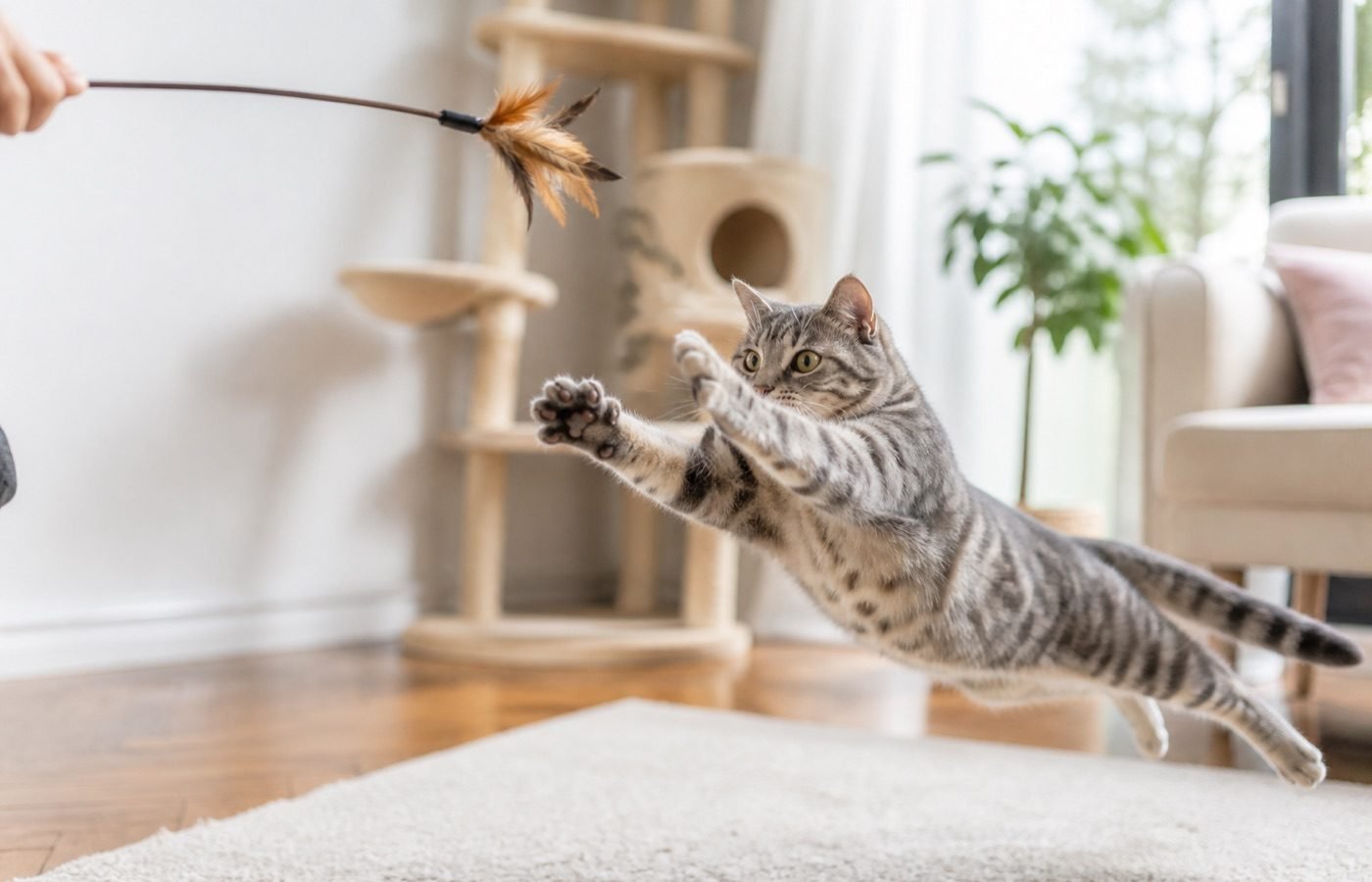
3. Schedule daily play sessions. Two ten-to-fifteen-minute sessions with a wand toy, mimicking the stalk-chase-catch rhythm of a hunt, do more for your cat’s mood than any gadget. End each session by letting the cat “catch” the toy, then offer a small meal to complete the hunt-eat-groom-sleep cycle.
4. Go vertical. Cats feel secure and stimulated up high. A tall cat tree, wall-mounted shelves, or even cleared-off bookshelf tops give your cat territory to climb and survey. Vertical space is especially valuable in small apartments.
5. Rotate toys. A toy that sits out all week becomes invisible. Keep two or three sets and rotate them weekly so old toys feel new again. Cats tend to prefer small, lightweight toys they can bat, carry, and “kill.”
6. Try scent games. Hide treats around the house for your cat to find by nose, or offer cat-safe herbs like catnip, silvervine, or valerian root. Not every cat responds to catnip (sensitivity is genetic), so experiment to find what excites yours. Evidence on long-term effects of daily catnip use is limited, so most behaviorists suggest offering it a few times a week rather than constantly.
7. Embrace boxes and paper bags. The cheapest enrichment is often the best. Cats love the confined, crinkly security of cardboard boxes and paper bags (remove handles first). Cut entry holes in boxes to make forts, and replace them when they get soggy.
8. Offer safe visual stimulation. Videos made for cats, featuring birds, fish, and scurrying rodents, can captivate some cats for a surprisingly long time. An aquarium with a secure lid offers the same appeal in real life.
9. Teach tricks with clicker training. Cats can learn sit, high-five, spin, and even agility basics through short clicker-training sessions. Training builds communication between you and your cat and provides serious mental exercise in just five minutes a day.
10. Provide safe outdoor access. A screened catio, a secure balcony enclosure, or leash-and-harness walks let your cat experience the outdoors without its dangers. Even ten minutes of supervised fresh air and new smells can transform a restless indoor cat.
Making Enrichment a Daily Routine
Enrichment works best as a habit, not a project. Tie play sessions to existing routines, like one before breakfast and one before dinner. Scatter a few treats for a “treasure hunt” before you leave for work. Rotate one toy set every Sunday. Small, consistent efforts beat occasional grand gestures.
Signs Your Cat Needs More Stimulation
Watch for the classic signals of an under-enriched cat: waking you at 3 a.m. for play, ambushing ankles, over-grooming, eating out of boredom, or withdrawing and sleeping excessively. If you add enrichment and these behaviors persist, talk to your veterinarian, since medical issues like pain or thyroid problems can mimic boredom.
A happy indoor cat is an engaged indoor cat. Start with one or two ideas from this list today, and build from there.
#CatCare #CatEnrichment #IndoorCat #HappyCat